The Ultimate Guide to Capturing the Taj Mahal – A Photographer’s Bible
The Taj Mahal is without a doubt one of the most photographed monuments on the planet. Yet, every photographer who visits Agra wants to capture that one timeless frame—a shot that feels personal, evocative, and unique. Whether you are carrying a high-end full-frame DSLR or simply relying on your smartphone, shooting the Taj Mahal requires strategy, understanding of light, and an eye for composition.
Here is your comprehensive guide to taking world-class photos of the world’s greatest monument to love.
1. Timing is Everything: Mastering the Light
The Golden Hour (Sunrise): The doors open 30 minutes before sunrise. Be in line early so you are among the first through the security gates. As the first light hits the ivory-white marble, the Taj shifts from a subtle soft lavender to warm gold and blush pink. Morning light also means fewer crowds, calm reflective pools, and soft, flattering shadows.
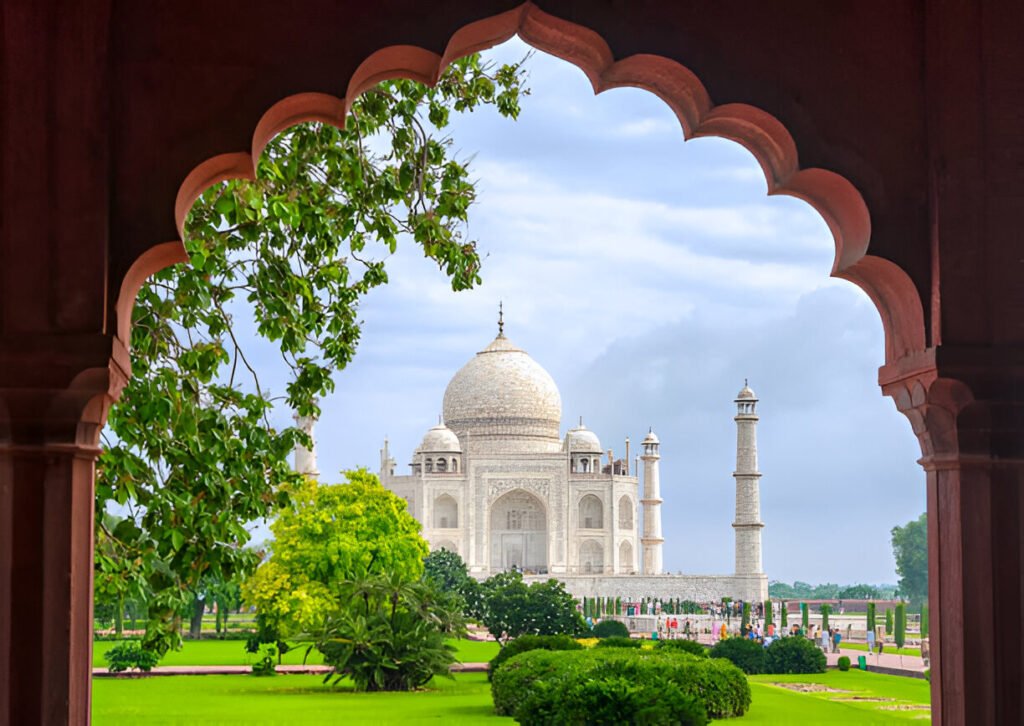
Midday Strategy: Direct noon sunlight can make the white marble look washed out and create harsh glare. If you find yourself there at midday, switch your focus to black-and-white photography, focus on intricate marble carvings, or frame shots through the dark red sandstone arches to create contrast.
The Crimson Sunset: Sunset brings a deep orange and purple haze across the Yamuna River. The back of the complex offers dramatic silhouette opportunities against the colorful sky.
2. Best Angle & Framing Locations
A. The Main Reflection Pool
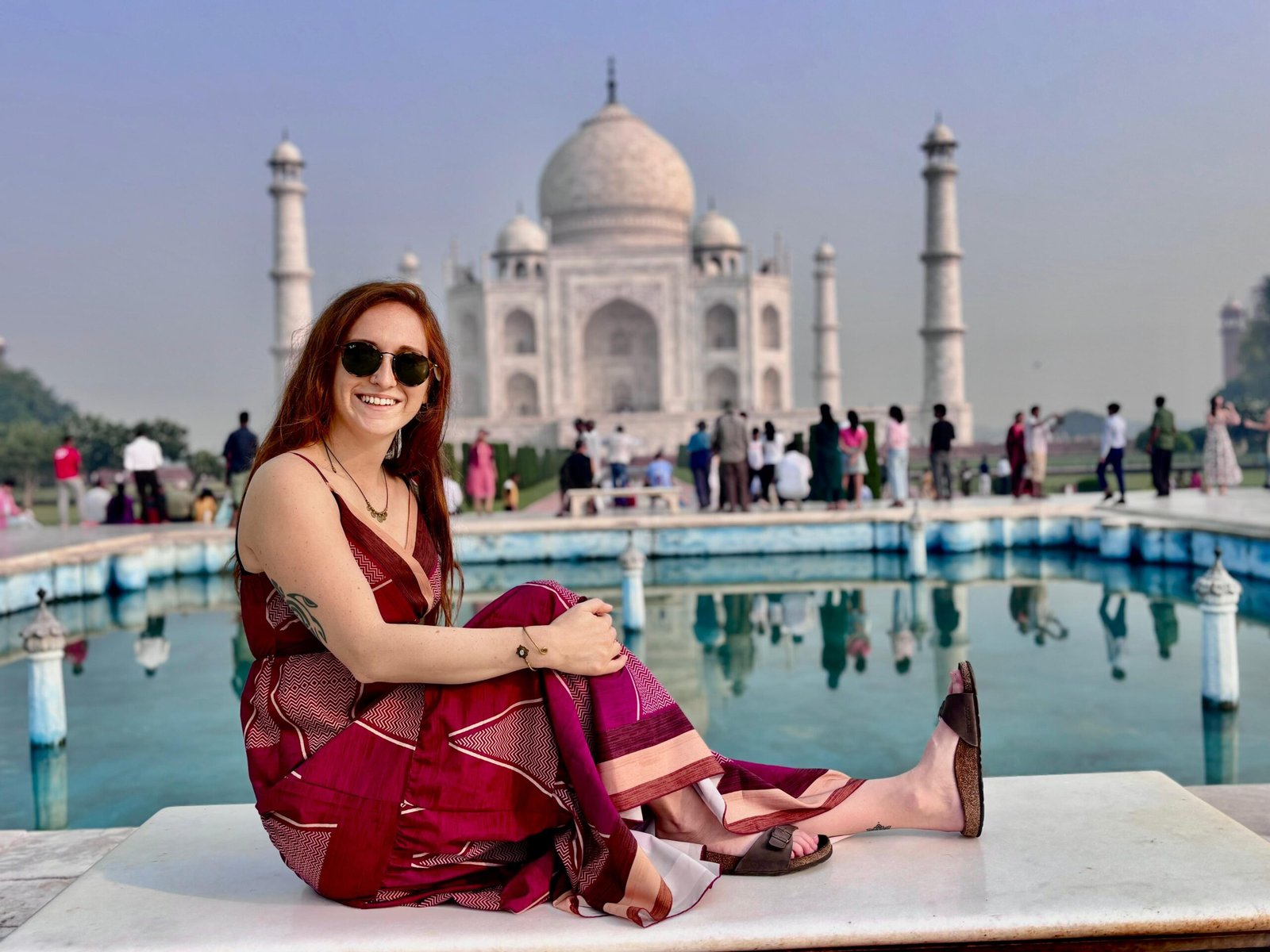
The iconic straight-on shot looking down the central waterway.
Pro Tip: Lower your camera angle as close to the water surface as possible to capture a perfectly symmetrical reflection of the main dome and minarets.
B. The Sandstone Mosque (West Side)
Located on the left side of the Taj Mahal, this red sandstone mosque features beautiful arched doorways (iwans).
Pro Tip: Stand inside the dimly lit mosque and frame the bright white Taj Mahal through one of the arches. The deep red sandstone acts as a natural photo frame.
C. Mehtab Bagh (Across the River Yamuna)
Located directly across the river, this crescent-shaped garden park offers an unobstructed view of the rear of the monument.
Pro Tip: Visit during late afternoon. The view across the water as the sun dips low provides stunning wide-angle landscape shots away from the heavy crowds inside the main complex.
D. Boat Rides on the Yamuna (Behind the Taj)
Subject to local permissions, local rowboats offer a perspective from water level.
Pro Tip: A low-angle shot from a wooden boat creates an enchanting, timeless aesthetic that looks like an old 19th-century painting.
3. Essential Photography Gear & Camera Settings
Lenses: A wide-angle lens ($16\text{–}35\text{mm}$) is vital for capturing the full grand scale of the monument and gardens. A standard telephoto zoom ($70\text{–}200\text{mm}$) lets you compress background details and zoom in on intricate inlaid stonework (Pietra Dura).
Tripod Policy: Note: Tripods are strictly prohibited inside the main Taj Mahal complex. If you need stability, practice hand-held shooting with higher ISO or use image-stabilized lenses. Tripods are permitted across the river in Mehtab Bagh.
Filters: A Circular Polarizer (CPL) helps reduce glare on the water pools and brings out the contrast in blue skies against the white marble.
4. Details & Micro-Moments
Don’t just take wide environmental shots. Look for details that tell a deeper story:
Pietra Dura Inlays: Zoom in on the delicate floral patterns carved from semi-precious stones (lapis lazuli, jade, turquoise) embedded in the white marble.
People & Scale: Include visitors in colourful saris walking past sandstone corridors to give viewers a true sense of scale and local culture.